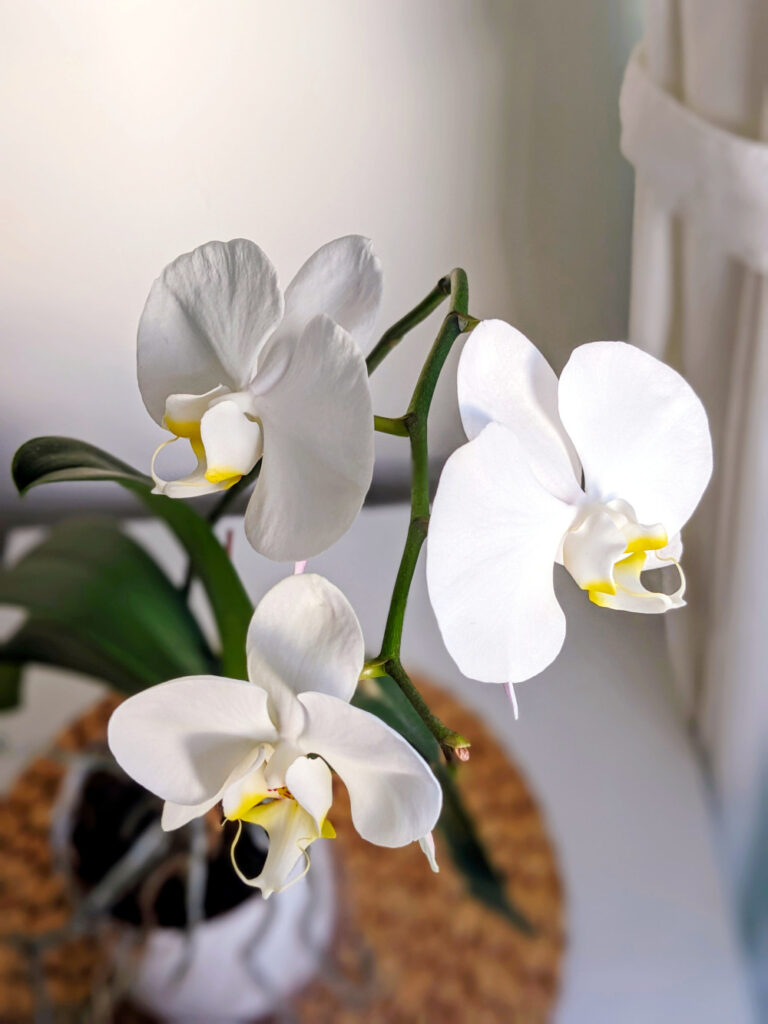
Three years ago, a dear friend gifted me an orchid as a housewarming present. It was breathtaking—creamy white blooms, glossy leaves, the kind of plant that whispers, “I’m thriving, and so will you in this new home!”
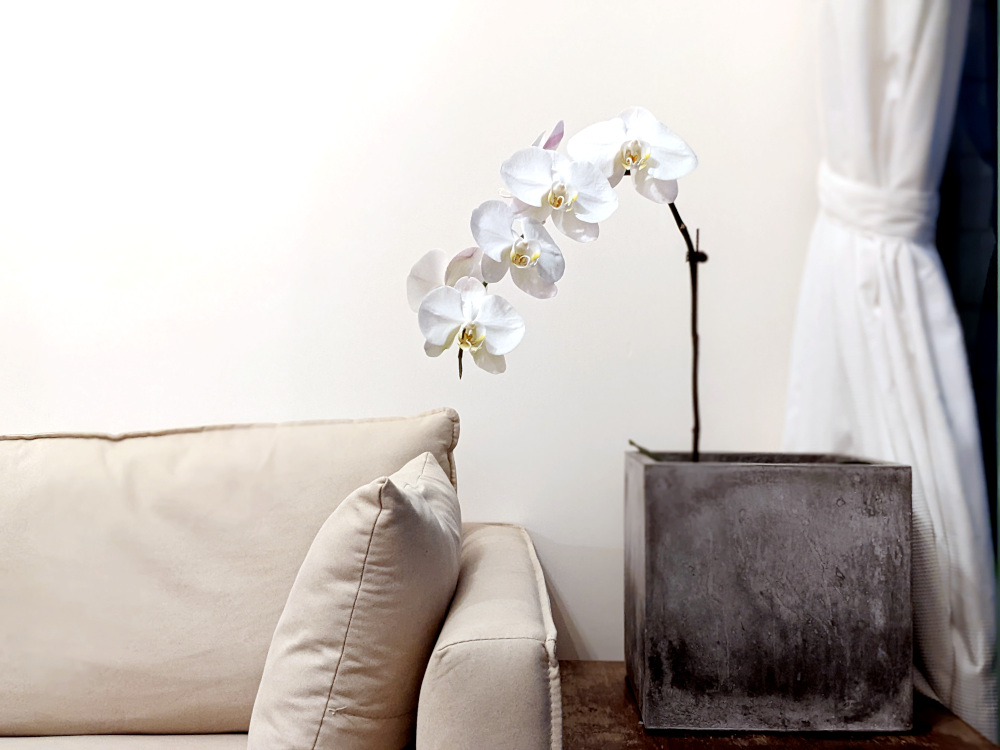
On November 3, 2022
But when the flowers inevitably wilted, I became the proud owner of a very expensive stick in a pot.
For two years, I kept it alive (go me!), but no matter how much (or how little) I watered it or whispered sweet nothings, it refused to bloom. Sound familiar? Maybe you’ve felt like that orchid—doing the bare minimum to survive, but not quite thriving.
Turns out, I’m not alone. Here’s the thing: orchids are one of the most gifted plants in the world—and also one of the most misunderstood. We buy them (or receive them) at their peak, dazzled by their blooms, but few of us know how to care for them long-term. Most end up in the compost bin after the flowers fade.
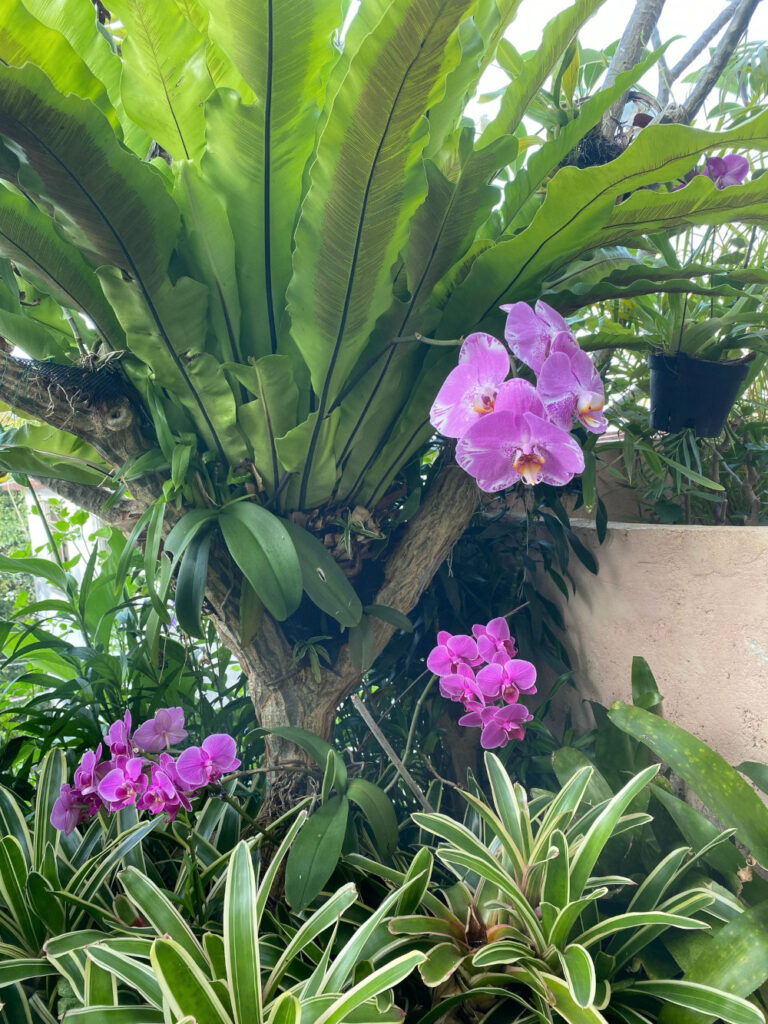
When I sheepishly confessed my orchid struggles to the friend who gifted it to me, she sighed knowingly, “Orchids are tricky, aren’t they? Most people don’t realize they’re not meant to live in pots forever. Mine cling to trees in the garden—they pull nutrients from the bark and thrive in the humidity. It’s about the whole environment, not just water.”
Her words stuck with me. We expect orchids to bloom in conditions that are nothing like their natural habitat—and then blame ourselves when they don’t. Sound familiar? How often do we do the same with our own health?
Pictured are my friend’s orchids in her garden
Your Gut: The Overlooked “Garden” Inside You
My friend’s lush island garden got me thinking about another ecosystem: your gut microbiome. Imagine it as a bustling internal rainforest:
- It craves diversity: Just as a garden thrives with flowers, herbs, and pollinators, your gut needs a mix of “good” bacteria to digest food, fight inflammation, and even regulate your mood.
- It’s self-sustaining (when fed properly): Load it with fiber, fermented foods, and prebiotics, and it’ll reward you with energy and resilience. Starve it with processed meals or stress, and weeds (hello, sugar cravings!) take over.
- It’s interconnected: Your gut “talks” to your brain (ever felt nauseous before a big meeting?), supports your immune system, and even influences how you absorb nutrients.
But here’s the kicker: You can’t force a rainforest to grow in a concrete jungle. Just like my apartment orchid, your body needs the right environment to truly flourish.
Why Surviving Isn’t Thriving (for Orchids and Humans)
After my friend’s advice, I marched to a flower shop and asked, “What am I missing?!” The answer? Chronic undernourishment. I’d given my orchid water and light, but no food. No wonder it was stuck in survival mode! So I immediately bought flower food–multi-purpose organic gardening liquid to start adding nutrition to it.
Humans aren’t so different. We might “survive” on caffeine, takeout, and 5 hours of sleep, but thriving requires:
- Real Nutrition
- Not just calories, but vibrant, nutrient-dense foods: leafy greens, colorful veggies, healthy fats, and proteins. (Think of it as “flower food for humans.”)
- Hydration that’s more than a lukewarm coffee.
- A Nourishing Environment
- Physical: Clean air, movement, sunlight. (Yes, even in the city—get creative!)
- Emotional/Social: Stress management, meaningful connections, and boundaries. (Your gut bacteria hate drama as much as you do.)
- Patience and Consistency
- My orchid took a year to bloom after I started feeding it nutritiously. Health isn’t a sprint—it’s a lifelong journey, and the journey is the reward.
Your First Step Toward Thriving
You don’t need a tropical garden to start nurturing your ecosystem. Here are some simple steps you can take to begin today:
- Feed Your “Flower Food”: Add one extra handful of leafy greens or/and a side of kimchi to your next meal. (Your gut microbes will throw a party. )
- Create a Mini “Rainforest” Moment: Open a window for fresh air, light a calming candle, or take five deep breaths. Small environments matter. Stress reduction techniques like these can help promote harmony between your central (brain) and enteric (gut) nervous systems.
- Check Your “Roots”: Ask yourself: What’s one tiny habit I can tweak this week to feel more nourished? (Sleep 15 minutes earlier? Swap soda for sparkling water? You decide!)
- Partner with Your “Gardeners” (aka Meds): Medications like antibiotics or NSAIDs? Think of them as well-meaning landscapers—they clear the weeds but can trample your flowers. Pro tip: If you’re prescribed antibiotics, ask your doctor about pairing them with probiotics to protect your gut’s “good bugs.” A little prep goes a long way in avoiding the gut drama.
- Shake Your Stems (Yes, You!): Orchids love a gentle breeze—you love a gentle walk. Dance while microwaving leftovers, stretch like a cat waking from a nap, or march in place during Zoom calls. Motion = life.
Progress, not perfection. Even my orchid needed time to rebuild its strength. Now, she has been blooming and brightening up my apartment with her three (not six as before, but I’ll take it!) beautiful flowers since last week. See the pics below.
Let’s get you there, too. → Book Your Free 50-Min Health Chat Here
We’ll dig into your unique needs, weed out what’s not working, and plant a roadmap to thriving because you deserve more than a “stick in a pot” life! Think of it as “flower food for your soul. “
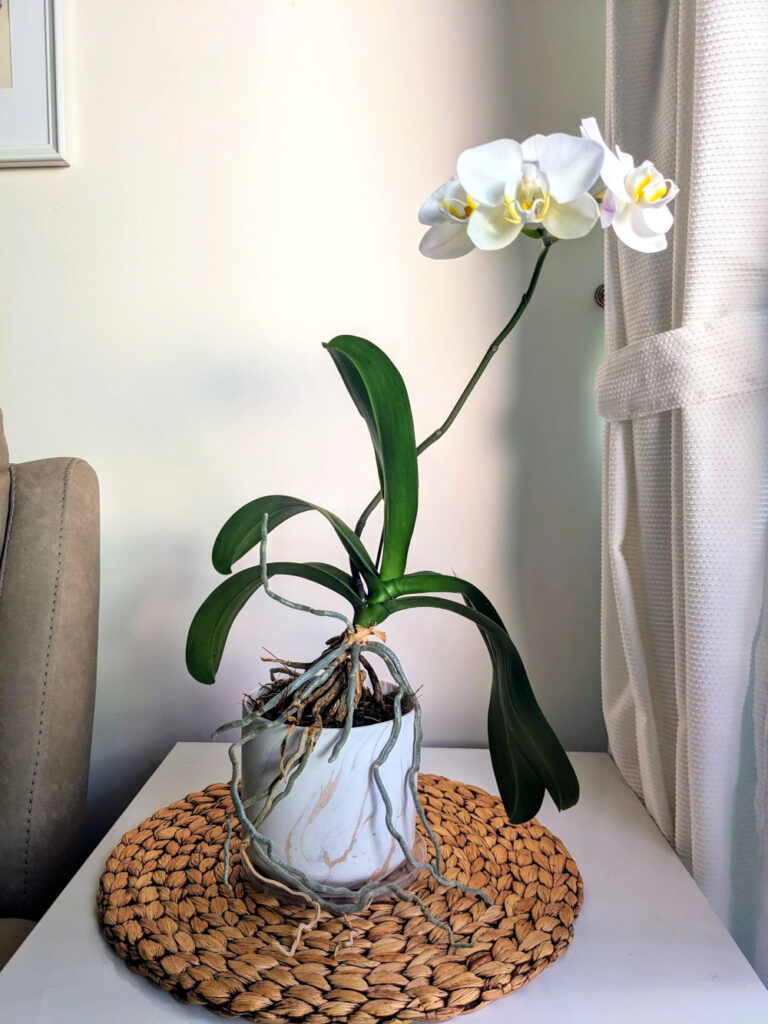
My beautiful “stick in a pot” on May 4, 2025